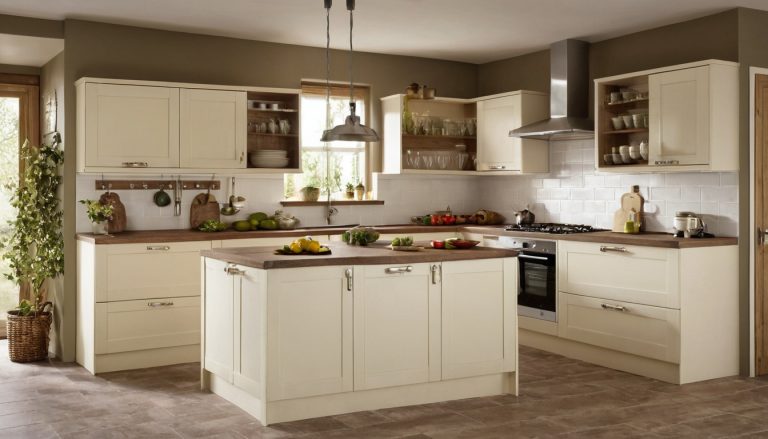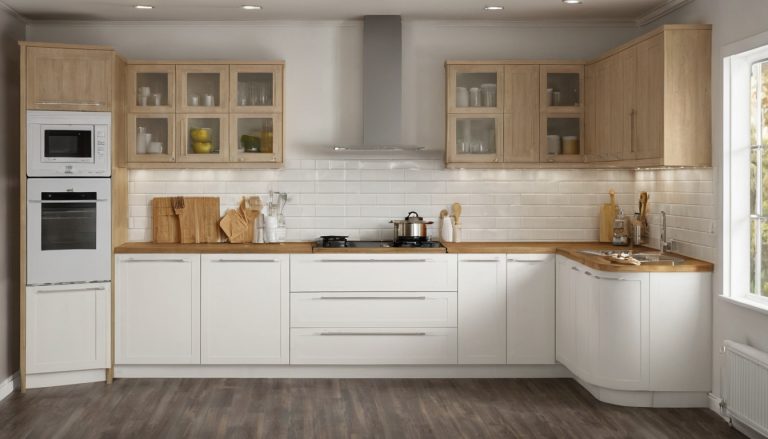
Compare White Kitchen Cabinets With Black Before You Approve the Door Order
A 10-by-10 cabinet advertisement gives you one number. What does it leave out for finished panels, fillers, toe kicks, delivery, and installation? White kitchen cabinets are often the safer order, yet black can be the better choice when both colors are compared through the same complete specification.
- Freeze one comparison basket: use identical Shaker cabinets, hardware, accessories, delivery terms, tax basis, and installation scope.
- Inspect exact samples: compare white and black doors under the lighting planned for your kitchen.
- Release nothing early: confirm every exposed component, finish code, substitution rule, and replacement option in writing.
White kitchen cabinets are the safer order only when the complete specification supports them
White kitchen cabinets are the safer specification only if the selected Shaker range offers white as a stock finish, supplies all matching parts, and prices the complete installation below or close to black.
- Freeze one 10-by-10 comparison: use the same cabinet schedule, hinges, drawer hardware, countertop interfaces, installation scope, delivery terms, and tax basis. This basket compares finishes, not the universal price of a 10-by-10 kitchen.
- Complete the local quote: record the US supplier, cabinet range, door model, finish codes, sheen, stock or custom status, lead time, and quote date.
- Check practical differences: compare samples, visible marks, cleaning instructions, touch-up support, replacement-door terms, and installed cost.
Black can be the better deliberate choice, but neither color is ready for release until every exposed panel, filler, scribe, and toe kick is accounted for.
A white or black Shaker cabinet order must include every exposed panel, filler, and toe kick
A white or black Shaker run is incomplete until the supplier confirms every visible component in the specified finish, sheen, substrate, and edge treatment. Check the current catalog and a dated local quote. Do not assume the door color extends to every accessory.
Which matching cabinet parts are commonly missed before the door order?
- Finished ends on wall, base, and tall cabinets
- Island backs and panels beneath countertop overhangs
- Wall fillers, corner fillers, scribes, and tall-unit infills
- Toe kicks, returns, moldings, light rails, and appliance panels
- Touch-up materials and replacement doors
Final elevations should show the quantity and dimensions of each piece. Ask whether accessories are exact matches, coordinated colors, or different materials. A painted door beside a foil-wrapped filler may look distinct across a full run.
Do filler strips make white and black cabinet runs look different after installation?
Fillers affect the finished appearance, but neither color corrects poor setting-out. A broad white filler can resemble an unfinished blank strip; a broad black filler can deepen the shadow beside a wall. The fitter needs wall deviation, handle clearance, corner movement, and scribe allowance before fixing filler widths.
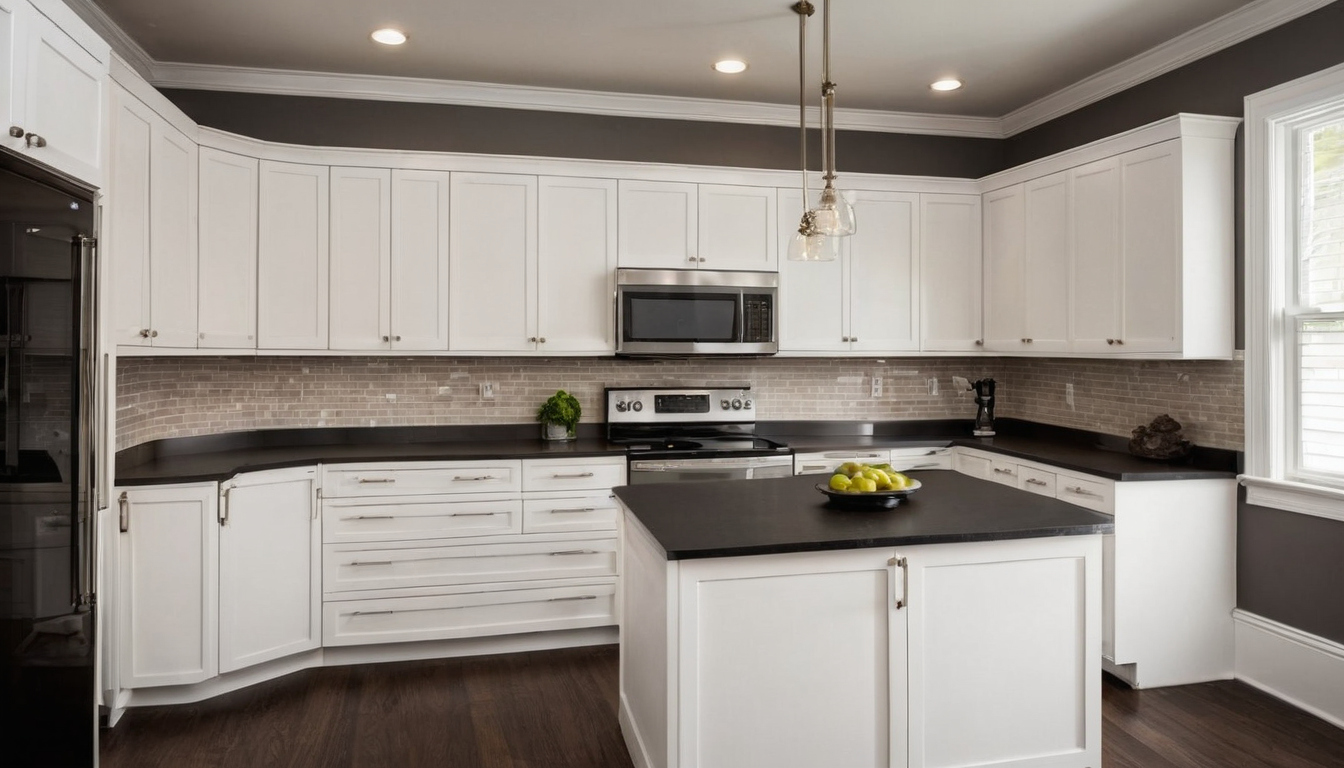
A white or black Shaker cabinet order must include every exposed panel, filler, and toe kick shown with floor, wall, and fixture relationships visible.
Can a future replacement door still match the original cabinet finish?
A replacement can match only while the finish code and construction remain available, and a later batch may differ beside aged doors. Record the code, replacement terms, warranty treatment of color variation, and recommended spare materials. Once that risk is documented, inspect both samples under the kitchen’s actual light.
White and black cabinet samples must be compared under the kitchen’s actual light
Judge full-size sample doors from the exact Shaker range in the kitchen, not on a screen or showroom wall. Position each door vertically and horizontally, then inspect it in morning, afternoon, and evening light.
Does a white-on-white kitchen require matching whites or controlled contrast?
A white-on-white kitchen needs deliberate matching or deliberate contrast. Place the cabinet, wall, countertop, backsplash, floor, and appliance samples together. Undertone, sheen, texture, and substrate can make similarly named whites look unrelated under the final lamps.
How should black Shaker cabinets be tested for shadows and glare?
Inspect the rails, stiles, recessed panels, corners, and tall faces under the planned ceiling, under-cabinet, and pendant settings. Confirm lamp position, color temperature, beam angle, dimming, and color rendering, and coordinate pendant lighting before installation. Then test how the finish handles fingerprints and repairs.
Fingerprint visibility and touch-up quality depend on the cabinet finish system
Compare black and white cabinets by finish system and sheen, not color name alone. Test the exact samples for fingerprints, cooking residue, approved cleaning, scratch visibility, and touch-up appearance under the planned lighting.
Do black cabinets show more fingerprints than white cabinets in normal kitchen use?
Black gloss often makes skin oils easier to see, while white can reveal food marks and grime sooner. Matte, textured, and anti-fingerprint surfaces behave differently. Test each sample using the same clean hand contact, residue, viewing distance, lighting, and manufacturer-approved cleaner.
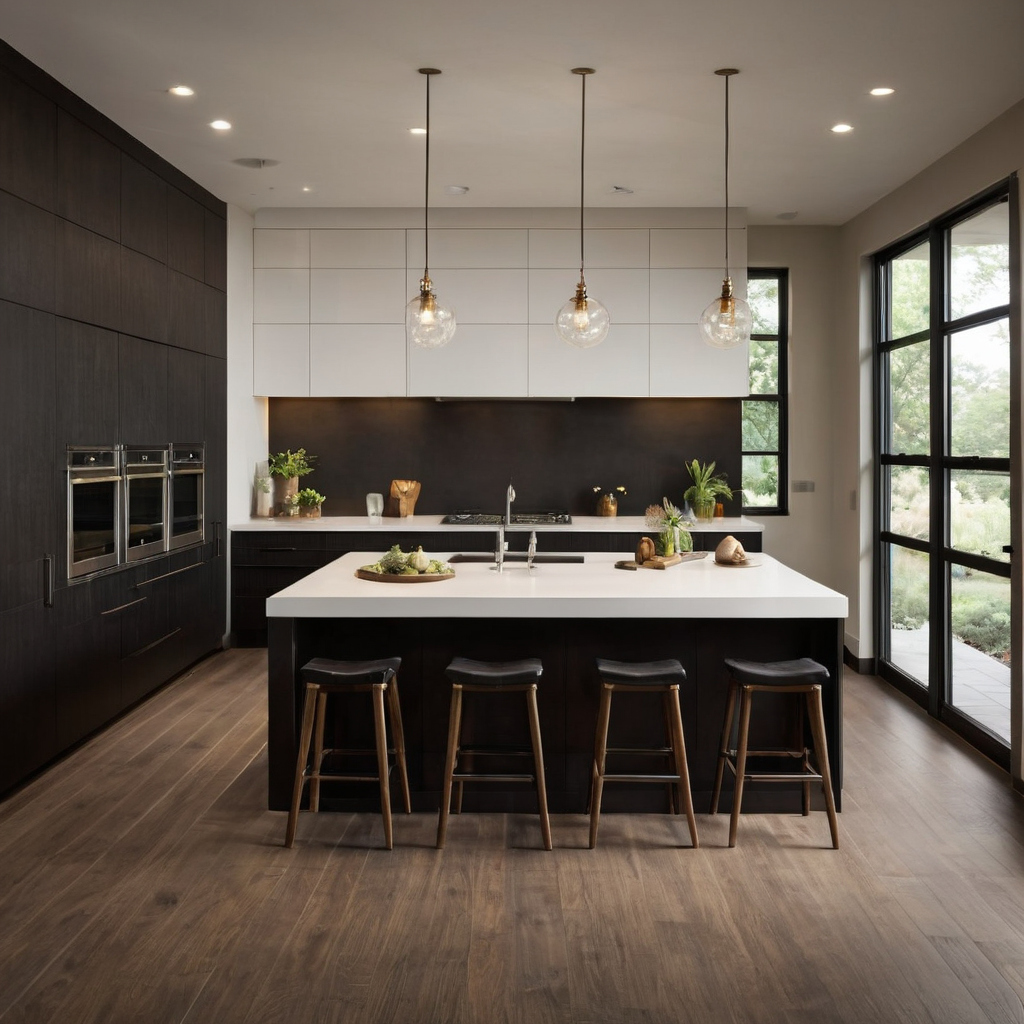
Fingerprint visibility and touch-up quality depend on the cabinet finish system shown with finish, fixture, and clearance relationships visible.
Identify whether the surface is painted, stained, laminate, foil, or acrylic, then obtain its cleaning instructions and prohibited chemicals. The U.S. Environmental Protection Agency’s VOC guidance identifies paints, varnishes, waxes, cleaning products, building materials, and furnishings as possible indoor VOC sources. The EPA also recommends increased ventilation while VOC-emitting products are being used.
Can white and black cabinet chips be repaired without replacing the door?
A touch-up can disguise a small edge chip, but it rarely recreates an invisible factory finish. Confirm the approved product, application instructions, shelf-life guidance, price, and warranty effect. Face scratches, worn corners, exposed substrate, or color variation may justify a replacement door.
Moisture around sinks and dishwashers also needs prompt attention because the EPA advises fixing wet or damp spots promptly. For related maintenance choices, see how kitchen details age in hot, dusty climates. With the repair limits established, compare complete installed costs.
The same 10-by-10 Shaker run reveals the real installed-price difference
A fair price comparison holds one dimensioned 10-by-10 Shaker schedule, market, currency, tax basis, and quote date constant. Price identical boxes, hinges, drawers, handles, and installation assumptions, then isolate finish-related changes.
What belongs in a fair white-versus-black cabinet price table?
- Quantity, unit price, finish code, and extended price for every cabinet and exposed component
- Separate costs for doors, fillers, panels, moldings, appliance panels, toe kicks, freight, tax, installation, disposal, and waste
- Quote validity, measurement scope, and each finish-driven difference
Keep appliances, countertop upgrades, and lighting changes outside the color comparison. ENERGY STAR states that qualified LED lighting uses at least 75 percent less energy and lasts up to 25 times longer than incandescent lighting, but that operating consideration does not make either cabinet color cheaper. You can also price fillers, panels, and installation before ordering.
When does a stock white finish cost less than a custom black finish?
White costs less only when the supplier classifies that exact white as stock while black carries setup fees, minimum quantities, stricter deposits, non-returnable terms, or extra delivery costs. Confirm every term in a dated local quote before preparing the approval schedule.
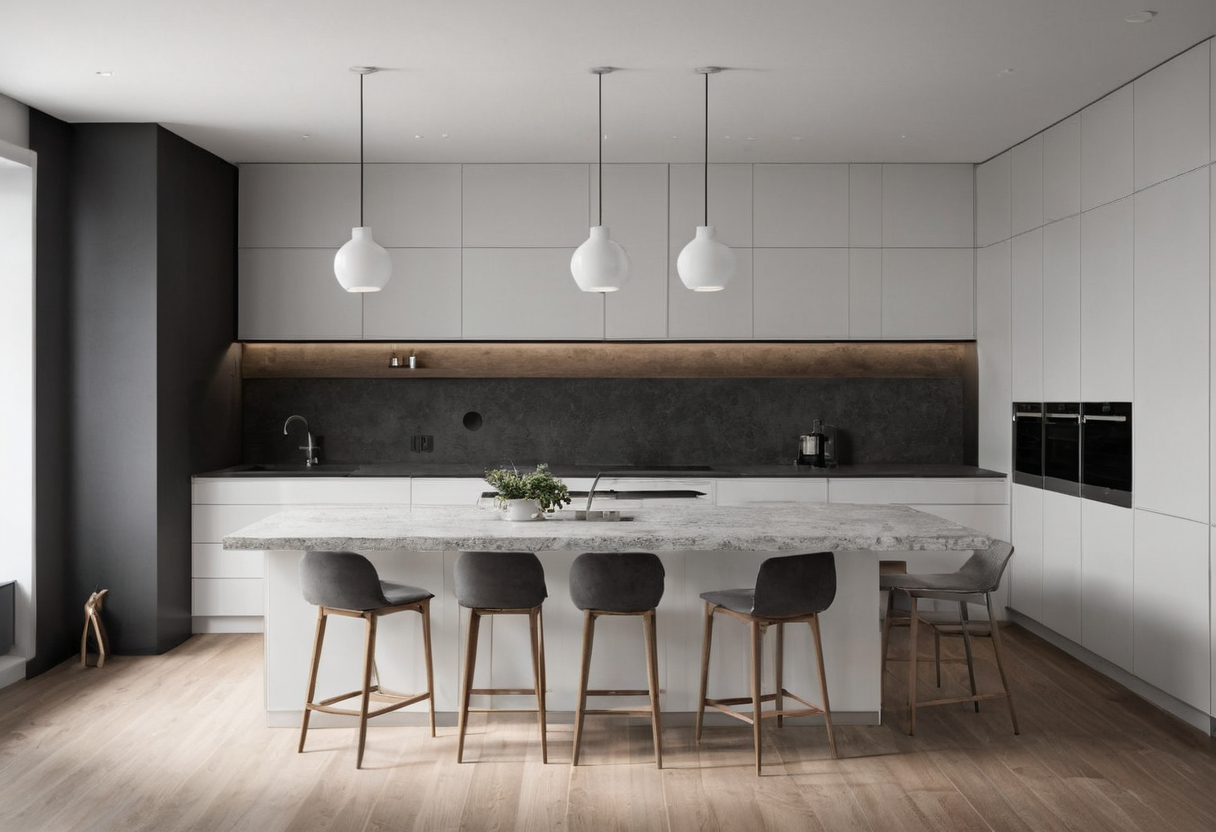
The same 10-by-10 Shaker run reveals the real installed-price difference shown with floor, wall, and fixture relationships visible.
Approve the cabinet colour with a signed finish and component schedule
Approve the cabinet color only after a signed schedule ties every visible part to a finish code and physical sample. The approval pack should record substitutions, batch variation, spare material, filler widths, countertop interfaces, lead times, and responsibility for post-order changes.
What must be checked before white or black cabinet doors are released for production?
- Attach final elevations identifying doors, panels, fillers, scribes, toe kicks, moldings, and appliance panels.
- Confirm site dimensions, appliances, door swings, handle clearances, panel thicknesses, filler widths, and countertop overhangs.
- Record the sample identification, approval date, signatories, and storage location.
- Confirm availability, compatibility, quote basis, drawing revision, delivery sequence, and substitution procedure.
- Assign responsibility for measurement, ordering, delivery inspection, installation, and defect reporting.
What cabinet finish details must be checked at delivery?
Before unpacking, compare the product, finish, batch, size, and quantity labels with the signed schedule. Photograph damage, shortages, and color discrepancies within the supplier’s reporting period. Compare one protected component with the approved sample before installation starts.
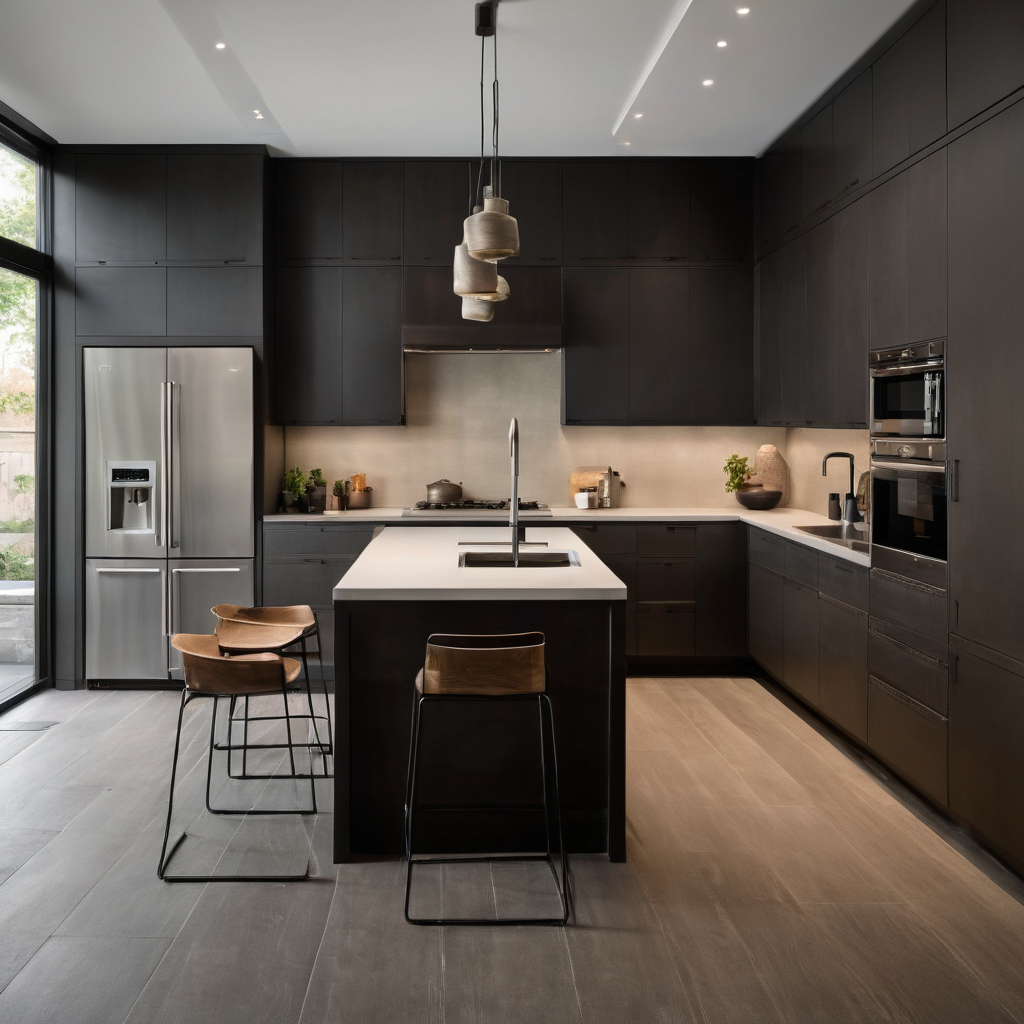
Approve the cabinet colour with a signed finish and component schedule shown as a planning reference for layout, scale, and material decisions.
Frequently asked questions
Release no doors until every exposed item, sample, drawing revision, quote basis, substitution rule, and delivery check is signed.