What It Actually Costs to Furnish a Two-Bedroom Apartment in Dubai
What It Actually Costs to Furnish a Two-Bedroom Apartment in Dubai
Three budgets furnish the same 120 square metre two-bedroom apartment in Dubai: roughly AED 60,000, roughly AED 260,000, and roughly AED 720,000. The floor area does not change. The difference sits in frame construction, upholstery fill, stone thickness and how many years the pieces survive before replacement.
| Category | Entry, stock retail | Mid, imported stock | Specified, production order |
|---|---|---|---|
| Living room seating | AED 9,000 | AED 55,000 | AED 165,000 |
| Dining table and 6 chairs | AED 7,500 | AED 38,000 | AED 110,000 |
| Primary bedroom set | AED 11,000 | AED 48,000 | AED 130,000 |
| Second bedroom | AED 6,500 | AED 26,000 | AED 62,000 |
| Storage and joinery | AED 8,000 | AED 42,000 | AED 145,000 |
| Lighting | AED 4,500 | AED 21,000 | AED 58,000 |
| Rugs, window treatment, accessories | AED 13,500 | AED 30,000 | AED 50,000 |
| Total | AED 60,000 | AED 260,000 | AED 720,000 |
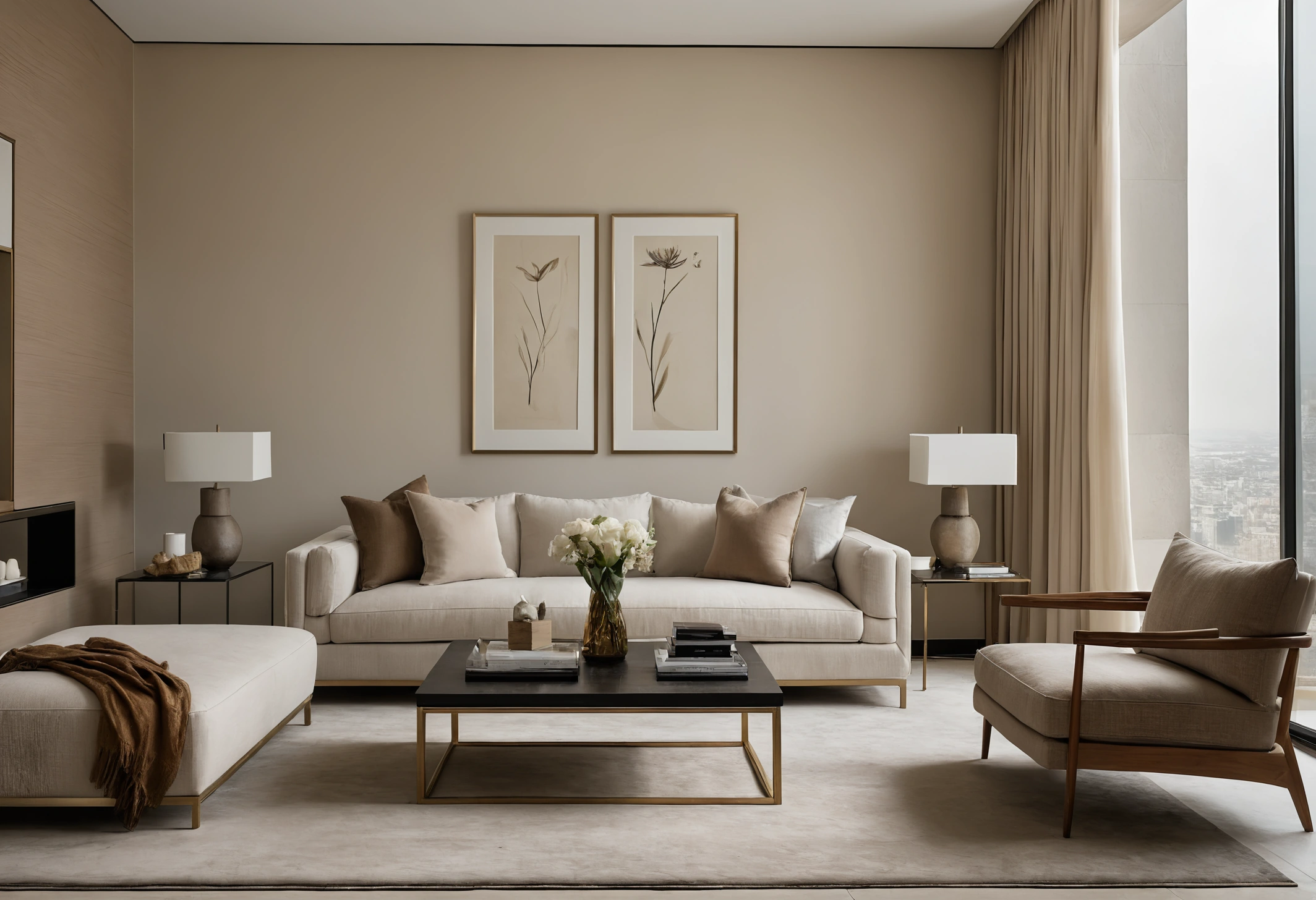
A sofa’s price is set by frame timber, suspension and fill, not by its silhouette
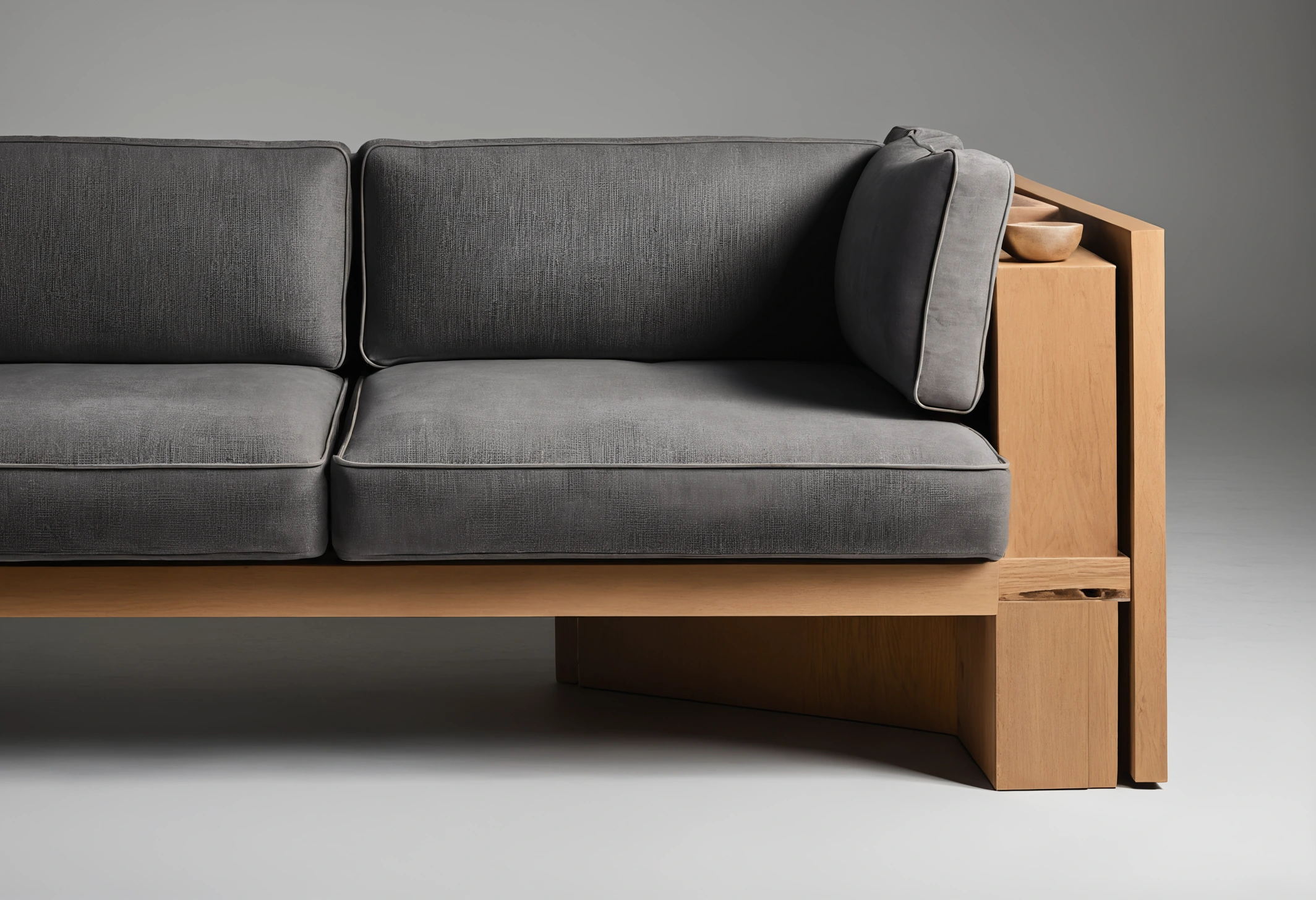
Sofa pricing in Dubai divides along three construction variables: frame material, suspension system, and cushion fill. A visually similar three-seat sofa can cost AED 6,500 or AED 78,000, and the visible difference on a showroom floor is small while the difference across ten years of use is total.
- Entry construction: engineered particleboard or softwood frame, elastic webbing suspension, single-density polyurethane foam at roughly 25 kg per cubic metre. Visible sag typically appears within 24 to 36 months of daily use.
- Mid construction: kiln-dried hardwood frame, sinuous steel springs, high-resilience foam at 30 to 35 kg per cubic metre with a polyester fibre wrap. Service life of 8 to 12 years.
- Specified construction: kiln-dried beech or ash frame with mortise and tenon joints, hand-tied springs or elastic strapping over a solid rail, layered goose down over shaped high-resilience foam. Service life beyond 20 years with reupholstery at year 12 to 15.
Fill density explains most complaints about expensive sofas that sag. Foam rated at 25 kg per cubic metre loses a measurable percentage of its original height under continuous load, while foam rated at 35 kg per cubic metre holds shape far longer under identical use. Buyers rarely ask for the density figure, and most entry retailers in Dubai do not print it.
Cost per year of use reverses the ranking of the three budgets
Dividing purchase price by realistic service life produces an annual cost that inverts the intuitive ranking. The entry budget of AED 60,000 replaced every four years costs AED 15,000 per year. The specified budget of AED 720,000 held for 20 years costs AED 36,000 per year, and retains resale value that the entry budget does not.
| Budget | Purchase price | Realistic service life | Cost per year |
|---|---|---|---|
| Entry, stock retail | AED 60,000 | 4 years | AED 15,000 |
| Mid, imported stock | AED 260,000 | 11 years | AED 23,600 |
| Specified, production order | AED 720,000 | 20 years | AED 36,000 |
The entry budget is the cheapest way to furnish an apartment for four years and the most expensive way to furnish one for twenty.
Six line items inflate Dubai furnishing budgets after the quotation is signed
Six recurring items push a Dubai furnishing budget above its quoted figure, and none of the six appears on a standard retail invoice. Buyers who plan for the six treat the quotation as roughly 82 to 88 percent of the final outlay rather than as the complete number.
- Window treatment: AED 450 to AED 1,900 per linear metre of track for motorised sheer and blackout layers, frequently omitted from furniture quotations entirely.
- Delivery access: AED 4,000 to AED 12,000 per crane movement where a piece exceeds service-lift dimensions in a residential tower.
- Electrical modification: AED 2,500 to AED 9,000 to relocate ceiling points and add floor sockets once a furniture layout is fixed.
- Fabric upgrade: upholstery in a higher fabric category commonly adds 18 to 40 percent to the base price of a sofa.
- Assembly and installation: 3 to 7 percent of order value for imported pieces requiring on-site assembly.
- Storage between delivery and handover: AED 900 to AED 2,600 per month per container-equivalent where an apartment is not ready.
Imported furniture pricing in Dubai reflects freight, duty and dealer structure
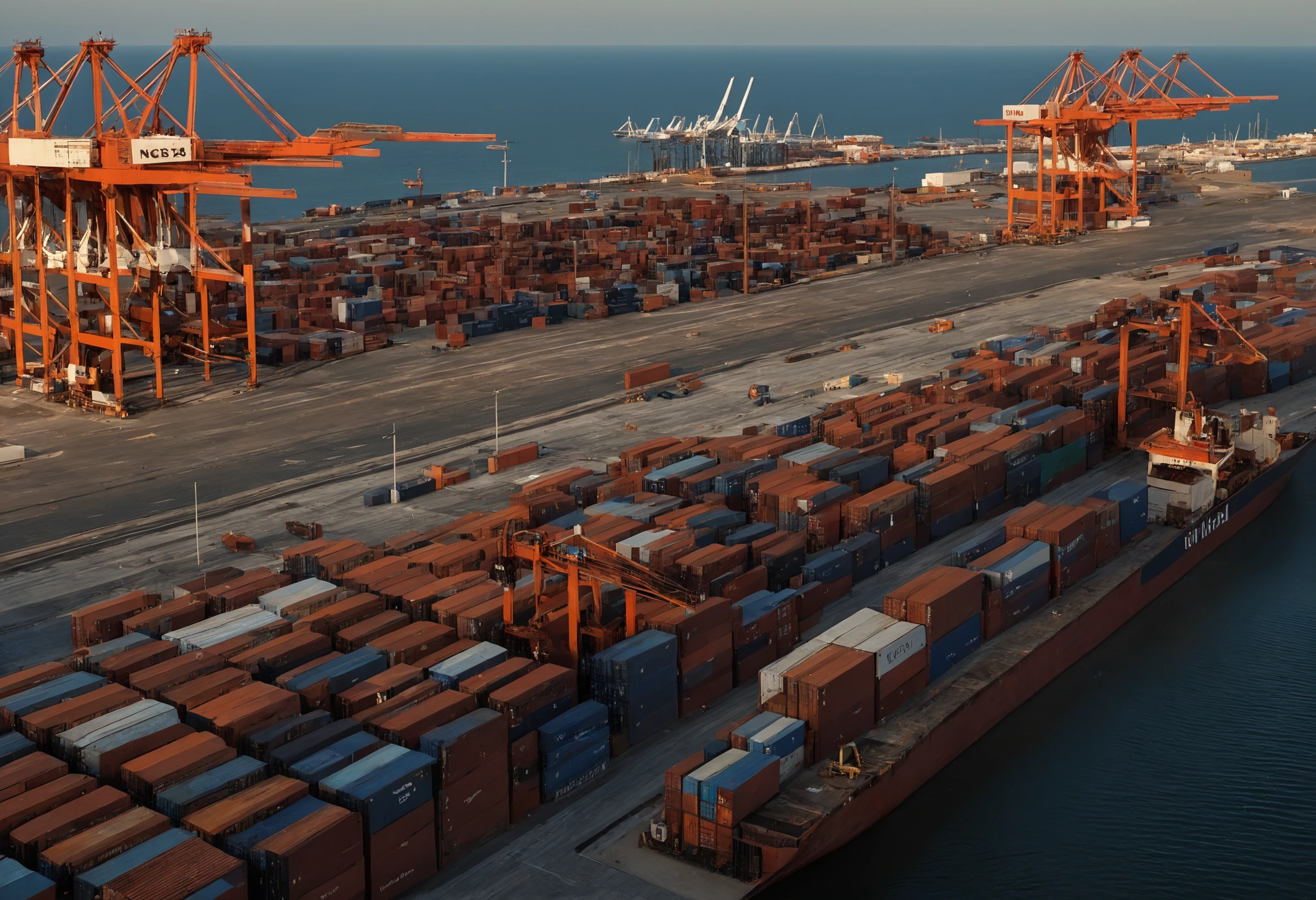
An Italian sofa retailing in Dubai carries a landed cost above its Italian list price through four additions: sea freight into Jebel Ali Port, the 5 percent UAE customs duty applied to most furniture imports, local warehousing, and dealer margin covering showroom stock and after-sales service. Understanding the four additions explains why parallel-import offers appear cheaper and why they behave differently after purchase.
Authorised dealers hold stock, honour manufacturer warranty terms and source replacement components from the factory. Parallel importers buying through third markets frequently cannot register a warranty claim with the manufacturer, which becomes relevant when a mechanism, a motor or a specific fabric run needs replacement in year three. Buyers comparing quotations for luxury Italian furniture should compare warranty registration and spare-part access alongside headline price.
Room-by-room spending follows a stable proportion across all three budgets
Across the entry, mid and specified budgets, the proportional split between rooms stays close to constant. Living areas absorb 28 to 32 percent of a two-bedroom apartment budget, bedrooms absorb 26 to 30 percent, and storage absorbs 13 to 20 percent. The proportion holds because room function, rather than budget level, drives the piece count.
| Area | Share of budget | Dominant cost driver |
|---|---|---|
| Living and reception | 28 to 32 percent | Seating construction and rug size |
| Bedrooms | 26 to 30 percent | Bed frame, mattress specification, bedside storage |
| Storage and joinery | 13 to 20 percent | Fitted versus freestanding decision |
| Dining | 12 to 15 percent | Table top material and chair count |
| Lighting | 7 to 9 percent | Decorative fittings versus architectural fittings |
| Soft furnishing and accessories | 6 to 10 percent | Window treatment linear metres |

The Dubai market context that sets furnishing expectations
Dubai held 81,200 resident millionaires, 237 centi-millionaires and 20 billionaires in 2025, with the millionaire population up 102 percent between 2014 and 2024, according to the Henley and Partners World’s Wealthiest Cities Report 2025. Property turnover matches that wealth concentration: the Dubai Land Department logged 226,000 transactions worth AED 761 billion during 2024.
High turnover shortens the average holding period of an apartment, which changes the furnishing calculation. An owner expecting to sell within four years rarely recovers the premium paid for production-order furniture through the sale price, because furniture is normally removed before handover. An owner-occupier planning ten years or more recovers the premium through use rather than through resale.
Where design fees enter the calculation
Design fees in Dubai are charged either as a rate per square metre of interior area or as a percentage of the delivered project value, and the two models produce materially different totals on a 120 square metre apartment. A per-square-metre rate is fixed at signature. A percentage fee rises with every specification upgrade, which aligns the designer’s income with the client’s spending.
On a two-bedroom apartment, full design documentation typically covers a measured survey, a layout plan, a furniture plan, photorealistic visualisation and a specification schedule. Studios delivering interior design services in Dubai under a single contract also carry procurement and installation, which moves the delivery access and assembly line items from the client’s risk column into the contract.
The honest summary of the three budgets
The AED 60,000 apartment works for a tenant on a one-year or two-year lease who expects to move within the emirate. The AED 260,000 apartment works for a resident settled in a district with a three to five year horizon. The AED 720,000 apartment works only for an owner-occupier, and only where the pieces are specified against a measured plan rather than bought individually across several months.
Every one of the three budgets fails in the same way, which is being applied to the wrong holding period. Matching the budget to the number of years the household will actually use the furniture removes the largest single source of waste in Dubai furnishing.