Kitchen Island Pendant Lighting: Spacing, Height, Glare, and Wiring Decisions Before Installation
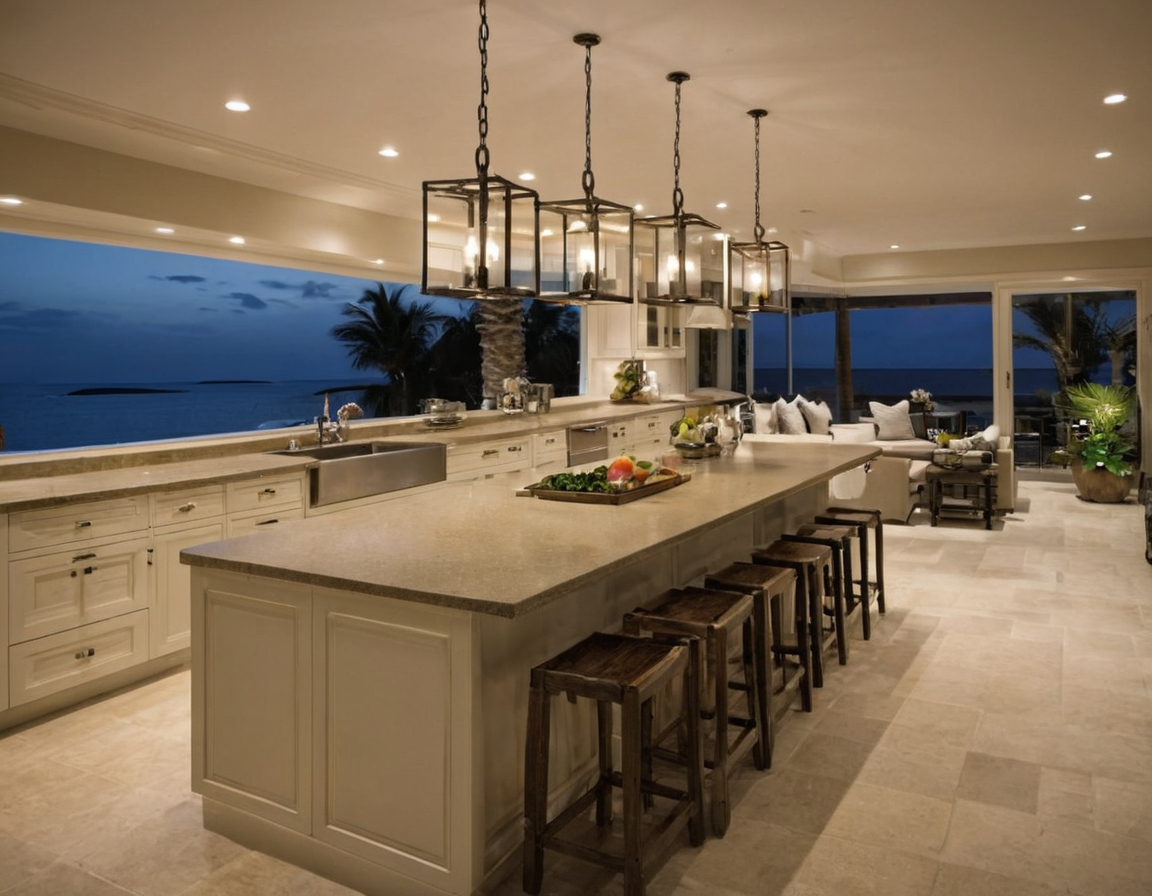
Fix ceiling points for pendant lighting for kitchen island use only after the island, ceiling, switching, support, and fixture data have been coordinated. The costly mistake is choosing pendants after cabinetry and ceiling work are already locked.
What must be decided before installing pendant lighting for a kitchen island?
Pendant lighting for a kitchen island should be decided before ceiling closure, switch box placement, false ceiling framing, and final cabinetry approval. Late choices can create off-center lights, exposed conduit, glare, weak task light, or ceiling repair.
The kitchen island layout should lead the pendant lighting layout
The island is the reference, not the ceiling grid. Confirm the finished island length, width, countertop thickness, seating overhang, sink or hob position, extractor hood, tall tap arc, and walking clearances before marking pendant centers.
- Island use: prep islands need stronger task alignment than islands used mainly for serving or display.
- Seating edge: pendant centers should not fall into the face line of seated users.
- Cabinetry and stone: final positions should follow approved cabinet drawings and finished countertop dimensions.
- Accessible planning: where accessibility applies, the 2010 ADA Standards for Accessible Design specify a 30 by 48 inch clear floor or ground space for wheelchair positioning.
The electrician needs a lighting plan before ceiling closure
The electrical plan should show pendant count, exact center points, fixture weight, canopy diameter, junction box type, cable route, switch zone, dimming method, driver location, and access strategy before gypsum board, slab conduit, or ceiling finishes are closed.
How far apart should kitchen island hanging lights be spaced?
Kitchen island hanging lights are usually spaced from the island centerline, with pendant count set by island length, fixture diameter, beam spread, and end setbacks. Measure from finished countertop edges, then check stools, sightlines, beams, AC diffusers, downlights, sprinklers, and slab conduits.
A spacing table should match island length to pendant count
| Island length | Starting count | Typical end setback | Planning note |
|---|---|---|---|
| 6 ft | 2 pendants | 12 to 18 in | Use compact shades. |
| 8 ft | 2 or 3 pendants | 15 to 24 in | Keep three pendants visually light. |
| 9 ft | 3 pendants | 18 to 24 in | Check equal gaps. |
| 10 ft | 3 pendants | 18 to 30 in | Large shades may reduce the count. |
| 12 ft | 3 or 4 pendants | 24 to 30 in | Consider a linear pendant. |
Pendant centers should align with the island
The island centerline usually matters more than a nearby downlight grid or decorative ceiling joint. A small adjustment may be acceptable, but a pendant centered on an AC diffuser while missing the island will read as a site mistake.
Large pendants need fewer fixtures and wider spacing
Large pendant light fixtures for kitchen island layouts need breathing room. Narrow islands often suit 8 to 12 inch shades, medium islands can take 12 to 16 inch shades, and wide islands may accept 16 to 24 inch fixtures.
How high should pendant light fixtures for a kitchen island hang?
Pendant light fixtures for a kitchen island should usually hang with the bottom of the shade about 30 to 36 inches above the finished countertop, then adjust for ceiling height, eye level, shade depth, beam spread, and seating.
| Ceiling height | Typical bottom-of-shade height above finished countertop | Practical adjustment |
|---|---|---|
| 2.4 m ceiling | 30 to 32 in | Keep shades compact. |
| 2.7 m ceiling | 32 to 36 in | Suits many island pendants. |
| 3.0 m ceiling | 34 to 40 in | Raise slightly while keeping task light. |
| Higher ceilings | 36 to 44 in, tested on site | Use longer cables or wider beams. |
The height should be measured from the finished countertop
The finished countertop is the reference plane because the pendant serves the island surface. Missing flooring, cabinetry legs, stone thickness, or waterfall panels can distort measurements if cables are cut too early. Where accessibility requirements apply, the 2010 ADA Standards set accessible dining and work surfaces at 28 to 34 inches above the finish floor or ground.
Open-plan kitchens need a sightline test
Stand at the sink, sit at the island, sit on the sofa, and check views toward the dining table, television, window, and the person opposite. Wide opaque drums, deep cones, large globes, and clusters block more view than slim cylinders or smaller glass forms.
LED choice also affects height and output. ENERGY STAR states that qualified LED lighting uses at least 75 percent less energy and lasts up to 25 times longer than incandescent lighting.

How high should pendant light fixtures for a kitchen island hang shown with hotel-arrival and visitor-movement context.
How should kitchen pendant lighting control glare and still light the work surface?
Kitchen pendant lighting should put usable light on the island without exposing bare LEDs or bright lamps to seated and standing users. Glare control depends on shade depth, diffuser quality, beam angle, lumen output, color temperature, dimming, and countertop reflectance.
A pendant is not always the main task light
Pendants can be ambient, decorative, task-focused, or mixed. For chopping, reading recipes, and serving, many kitchens need roughly 300 to 500 lux on the counter. If recessed downlights or under-cabinet lighting already cover the work surface, pendant light fixtures for kitchen island use can be softer.
Shade design decides whether the pendant causes glare
Check fixture data before the electrician fixes the point. Lumens describe total output, beam angle describes spread, CRI describes color rendering, CCT describes warmth or coolness, and cutoff describes how well the shade hides the light source.
Opal glass and linear diffusers soften kitchen island hanging lights. Deep metal shades control spill but can leave hard pools of light. Small exposed bulbs often glare across a seated island. For stone surfaces, the Natural Stone Institute recommends neutral cleaners, stone soap, or mild liquid dishwashing detergent with warm water, and warns against abrasive scouring powders or creams.
Color temperature should coordinate with cabinets, stone, and dining use
Warm white light suits timber, brass, cream cabinetry, and evening dining. Neutral white often works better with white kitchen cabinets, pale quartz, and stainless appliances. Cooler light can make food prep feel crisp, but it may flatten timber and make black kitchen cabinets look severe.
If late height changes require ceiling patching, paint, adhesive, or finishing products indoors, the U.S. Environmental Protection Agency recommends increasing ventilation when using products that emit volatile organic compounds.
What wiring, switching, and dimming decisions are needed before the electrician starts?
Pendant lighting for a kitchen island needs circuit, switching, dimming, and driver decisions before installation because fixture selection can affect cable type, load, control gear, ceiling access, and wall switch positions. Final wiring must follow local electrical code and be completed by a qualified electrician.
Pendant lights should usually have a separate switch zone
Island pendants should not be forced to behave like downlights, under-cabinet lighting, extractor lighting, or dining lights. A separate switch zone lets the island move from chopping surface to breakfast counter to evening background light.
- Confirm circuit strategy: ask whether the pendants can share a lighting circuit with other kitchen lights under local rules.
- Confirm switch positions: plan control at the kitchen entry, island seating, or open-plan living area.
- Confirm cable routing: ceiling voids, conduits, earthing, junction boxes, and protection must be settled before closure.
Dimmers must match the LED driver or lamp type
LED pendants can flicker, buzz, dim poorly, or fail to switch off cleanly when the dimmer and driver are mismatched. The dimmer must match the lamp or driver type, such as trailing-edge, leading-edge, 0-10V, or a specified digital system.
What wiring, switching, and dimming decisions are needed before the electrician starts shown with island travel and transport cues.
For addressable systems, the DALI Alliance describes DALI as a digital lighting-control protocol based on the IEC 62386 standard series. That matters only if the pendant drivers and control system are compatible.
Smart controls should not be an afterthought
Smart switches, scene plates, app control, and voice control can require neutral conductors, compatible drivers, hubs, or deeper back boxes. Decide the control method before rough-in.
How do ceiling construction and junction boxes affect hanging lights for kitchens?
Hanging lights for kitchens depend on ceiling construction as much as style. A gypsum ceiling, concrete slab, timber structure, or exposed ceiling can change junction box location, support method, canopy fit, driver access, and whether the pendant can be safely centered over the finished island.
Heavy pendant fixtures need structural support
Gypsum board is a finish, not the structure for a heavy glass pendant, oversized shade, or long linear fixture. Check fixture weight, junction box rating, and manufacturer fixing instructions before ceiling closure. If needed, add blocking, a bracket, a rated ceiling box, or structural anchors before paint.
Concrete slab ceilings require earlier coordination
Concrete slabs are less forgiving than suspended gypsum ceilings. Moving a ceiling point after conduit is cast, chased, or approved can mean exposed surface conduit, a false ceiling, or a visible patch. AC diffusers, sprinklers, beams, recessed downlights, and existing conduits should be checked against the island centerline early.
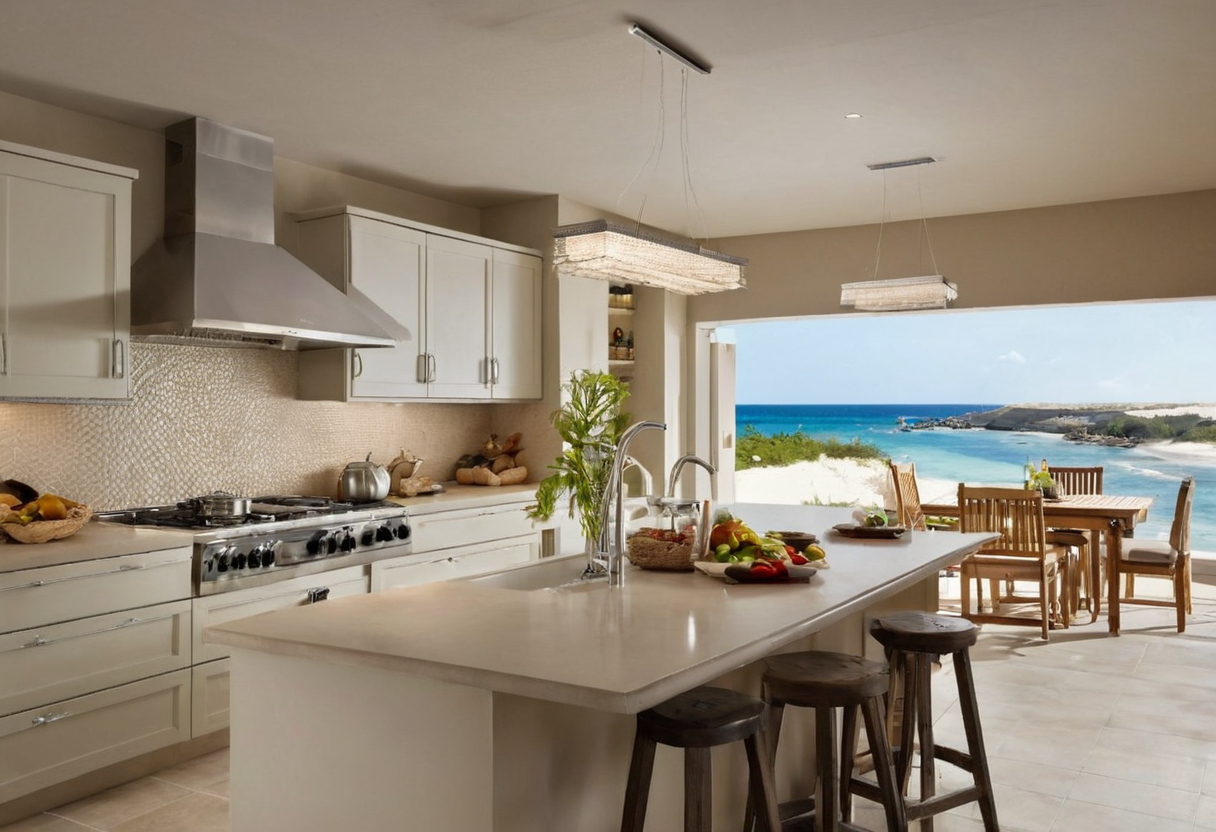
How do ceiling construction and junction boxes affect hanging lights for kitchens shown as a car-free Al Marjan Island travel planning reference.
Canopy size should cover the junction box
A small canopy may not cover a local junction box, rough opening, or shadow left by a relocated point. Before buying, confirm canopy diameter, fixing hole positions, cable exit, driver location, and access requirements.
Which fixture specifications should be checked before buying kitchen island pendants?
Kitchen island pendants should be bought only after checking dimensions, output, glare control, finish durability, dimming compatibility, replacement parts, delivery timing, and installation instructions. The right fixture fits the island, ceiling, circuit, maintenance plan, and project schedule.
Which fixture specifications should be checked before buying kitchen island pendants shown with island travel and transport cues.
The purchase checklist should include photometrics and installation data
Ask for diameter, fixture height, adjustable cable or rod length, canopy size, weight, wattage, lumen output, CCT, CRI, beam angle, dimming type, lamp type or integrated LED module, IP rating where relevant, warranty, and spare-part availability.
The electrician needs the mounting method, driver location, ceiling box requirement, earthing requirement, dimmer compatibility, and minimum ceiling void or canopy clearance. A pendant that cannot cover the junction box, dim smoothly, or hang at the specified height is a site problem.
Finish and cleaning matter in real kitchens
Kitchen island hanging lights live with steam, grease, fingerprints, dust, and cleaning sprays. Clear glass shows smears but is washable. Ribbed or seeded glass hides marks but collects dust. Black metal can show oil and scratches. Fabric, rattan, and open woven shades are poor choices near heavy cooking unless extraction is strong and the manufacturer approves the location.
FAQ
How far apart should kitchen island pendant lights be spaced?
Most island pendants start with 12 to 30 inch end setbacks and equal spacing between fixture centers. Exact spacing depends on island length, shade diameter, beam spread, stools, and ceiling services.
What are the practical rules for pendant lights over an island?
Center the layout on the finished island, hang most shades about 30 to 36 inches above the finished countertop, avoid seated glare, separate the switch zone, and verify support, canopy size, dimming, and driver compatibility before rough-in.
What is the formula for choosing the number of pendants over a kitchen island?
Start with island length, subtract end setbacks, then divide the remaining length into equal fixture centers. Adjust the count according to shade diameter, visual weight, and light spread.
Should pendant lights be centered on the kitchen island or the ceiling?
Pendant lights should normally be centered on the kitchen island. Ceiling joints, downlights, diffusers, and beams may require adjustment, but the finished island should remain the main visual reference.